
7 Reasons Why Your Brain Needs to Be in Amazing Shape for Success

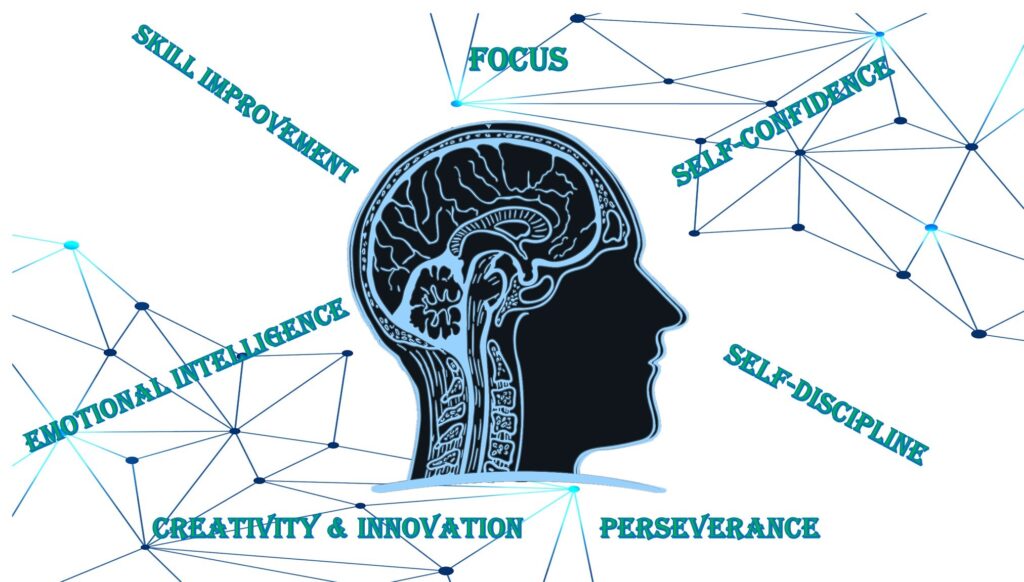
Your brain is your most powerful tool for success. It is the organ that oversees everything you see, hear, and feel. It controls your behavior, thoughts, memories and sense of self. When your brain is healthy and supported by the right habits, it works optimally to help you succeed in every area of life. The trouble with our modern lives is that we experience stress on a daily basis from being required to handle constant distractions as well as ultra-rapid changes in pace. When this happens, our brains have a difficult time processing all of the new information and changing demands. This can lead to stressed-out brains that can’t do their job effectively which is why having an effective brain fitness routine is so important for peak performance in every area of life. If your brain isn’t functioning at its best because it hasn’t been getting enough practice or support, you will definitely struggle with achieving peak performance in any area of your life’s endeavors. Here are 7 reasons why having an amazing brain is crucial for success.
Focus
Focus is the ability to be present and to not let other things distract you from your goals. Basically, it is the zoom function of your concentration that allows you hone in on the task at hand. This is an incredibly important skill to have in all areas of life, but it is doubly so in the business world where it can be so easy to get sucked into social media, email, meetings, and other outside commitments. The only way to remain focused on your goals and resist the pull of other distractions is to build in regular periods of “brain downtime” where you simply turn off all of your electronics and focus on yourself without any outside demands or expectations. This will help you to get your head back in the game, so that you can get on with your real priorities.
The best way to improve your focus is to practice deliberate and focused thinking. This can be done by creating a line of questioning that allows you to acquire new knowledge, confirm information already known, clarify underlying meanings, and identify a strategy for future action. When you engage in this process, you allow your brain to pause, examine, and assess things from a new perspective. You can also use focused thinking to create positive associations with your goals and positive outcomes. This will improve your mental associations with these concepts and make them seem more real and attainable to you.
Be on the lookout for signs that your focus is being drawn away from your goal. To successfully achieve a goal, you must learn to recognize when your attention is being diverted and then consciously resist that distraction. The best way to stay focused is to remain in the present moment, which requires conscious effort. Another valuable technique is to set a dedicated “focus time” each day. If the goal is a challenging one and requires considerable focus then your dedicated “focus time” should be at the start of your day when you are the most energetic and alert.
Self-confidence
Self-confidence is the belief that you can accomplish anything you set your mind to. This belief comes from constant reflection and awareness of the limitless potential that is within each of us. It is an essential pillar of life that allows us to go after our dreams and achieve the results we desire. The fact is, confidence cannot be faked. It comes from within and cannot be given or borrowed from anyone else. The only way to develop true confidence is to follow your dreams and commit to the things that you believe in. As you do this, you will gain experience and confidence that will help you to succeed at anything you put your mind to. If you are lacking in self-confidence, the first thing you should do is to examine the reasons for feeling this way. Why do you feel this way? What is it about your life right now that you would like to change? Once you know the source of your lack of confidence, you can take steps to correct it.
There are a few ways to develop self-confidence, but one of the most ideal is by turning it into self-esteem. Self-esteem is a positive feeling you have about yourself. It is how confident you are in your abilities and how much you believe in yourself. When you turn your self-confidence into self-esteem, you begin to see yourself from an objective point of view instead of from an internal one. You begin to see the value of your own skills and strengths instead of only relying on your own point of view. Self-confidence mixed with self-esteem is the best formula for success.
Self-discipline
Self-discipline is the ability to consistently follow through on whatever you commit to. Many people believe that discipline comes from making sacrifices, sacrificing your favorite things, or punishing yourself with self-inflicted pain or punishment. These acts are often meant to teach us that we have chosen poorly or that we have “failed” in some way. This is all a load of nonsense that can actually do real harm by focusing your thoughts on negative instead of positive attributes, which will surely not do your confidence any wonders either.
Self-discipline is defined as the practice of controlling your actions and impulses as well as your thoughts and feelings. It is the ability to not give into your desires and to make the best choice for yourself. The ability to exercise self-discipline has been shown to directly correlate with success in every area of life, including career and financial success. To be able to achieve your goals, you need to set yourself up for success. With discipline you just need to take consistent action. All forms of discipline have to do with consistently executing a plan that you have chosen for yourself. If you feel you lack self-discipline then begin by working towards a routine. That routine can be anything from eating right, exercising regularly, getting enough sleep, meditating, studying, reading etc. Developing a routine can help create discipline and from there you can focus on activities that help ensure success such as brain fitness exercises, productivity practices or deliberate thinking and problem-solving methods that will in turn reinforce your discipline and boost your confidence.
Perseverance
Perseverance is the ability to keep going when things get tough. It is the ability to press on when there is resistance, no matter what challenges you face, and to keep going when something meaningful is at stake. In order to truly achieve any goal, you need to persist. This means that you have to keep on trying, keep on improving, and keep on focusing on your goal despite the fact that you don’t feel like doing it. The ability to persist in spite of adversity, in spite of indifference, and in spite of the absence of benefit can be said to define perseverance. It is the tenacity and determination that comes from overcoming adversities and not giving up, even when things get tough. Tenacity is characterized by perseverance.
Even when things look bad, there is always something that can be done. Having knowledge of this truth can encourage you to look at a problem from every angle and find a solution. For even though perseverance is not a skill anyone can learn, it is something that can be improved. It is something that can be strengthened with practice and with encouragement. It can be developed through daily actions and the accumulation of experiences. Throughout your life, you will face many adversities and roadblocks. But if you stay motivated and persevere, you will eventually succeed. So, to begin improving your perseverance take deliberate actions everyday towards something you want to achieve. Focus on the process of reaching your goal, and not just on the outcome. Remember, perseverance is a choice.
Creativity and innovation
The ability to be creative and innovative is a great indicator of success in almost all areas of life. Whether you are a writer, artist, inventor, businessperson, or any other profession, creativity is the spark that ignites new ideas and new ways of thinking. Creativity is the act of using your imagination and is the key to seeing things in new ways, of seeing the value in options that others miss, and of seeing how things can be done in a new way. Creativity is based on not following what has already been done, but in seeing what hasn’t been done yet. To create new things, you sometimes have to unlearn old habits and ways of thinking and break from the norm. Regular exercise of your creative intelligence and innovation abilities is critical to success.
Creative intelligence can be strengthened through regular exercise, especially creative visualization. This can help you to come up with better solutions to problems. It will also give you a better understanding of how your mind works and how to work with it more effectively. Moreover, increasing your creative intelligence makes you more attuned to your environment and the world around you. It helps you to see the world in new ways, and it gives you the ability to generate creative solutions to problems. Creative intelligence helps you to be innovative, which in turn could help you generate something new. It is important to be innovative in your life because it allows you to stay ahead of the curve and generate fresh and original ideas and that my friends puts you in the driver’s seat to steer your life in the direction you wish.
Emotional intelligence
Emotional intelligence (EI) encompasses the ability to recognize and understand your own emotions along with being able to read, understand, and respond to the emotions of others. It is the ability to cultivate positive and healthy relationships, to manage your own emotions, and to express yourself authentically. This is an important skill to have in almost every area of life. A great way to improve your emotional intelligence is to practice self-awareness, one of the four primary elements. This means that you need to be aware of your emotions, your actions, your behavior, and your thoughts regardless of the source. It is also beneficial to cultivate this skill in your professional life. When you are better at reading the emotions of those around you, it improves your ability to relate to them and to better serve them. In this way, your work will be more likely to benefit from your skills in reading and responding to emotions. Relationships within your team or with your clients will be more productive. It will also make you a more attractive employee, since it will be easier to get along with co-workers and clients.
The four core components of EI are self-awareness, self-control, social awareness, and social skills like empathy, active listening and conflict resolution. Maintaining a positive attitude, being approachable and socializing with others, avoiding becoming hostile when encountering conflict, are all methods of building your emotional intelligence. As you can imagine, working on your emotional intelligence isn’t a one-time event. It’s an ongoing process that allows us to improve upon throughout life.
Skill improvement
A skill is the ability to perform actions with finesse, precision and grace. Your skill level is how well you perform an activity. Simply put, it is the combination of talent and training that determines how well you will perform an activity. While talent is largely genetic, the skill level at which you perform an activity can be improved with training. The more often you practice a given skill the better you will get at it. The key to having an effective skill level is to do it regularly. Regular practice is the key to developing better skill levels.
That being said, you may wonder: Is there a preferred way to practice or method to optimize a skill? The answer is, yes! It doesn’t matter what you want to accomplish or what you’re hoping to be, possessing the ability to learn is critical to going anywhere in life. The secret is not in learning facts and figures but in mastering the meta-skill of how to learn. Meta-skills are cognitive skills that boost your functional expertise, like that of optimizing the processes of learning, and are intertwined with emotional intelligence, creative intelligence and resilience. Meta-skills allow you to learn and develop new skills faster. There are a variety of ways that you can work on your learning ability, from practicing concentration to keeping a healthy attitude. Whatever you do, make sure that you’re working on the meta-skill of how best to learn. It’s the difference between being a contender and a champion.
Conclusion
Now that you have the reasons why your brain needs to be healthy and supported, it’s time to get to work on finding a routine that works for you. Having a healthy and functioning brain is the greatest gift you will ever receive. It is the portal through which you experience life, and has the potential for greatness in every way imaginable. The only thing holding you back is the way that you are currently using your brain. To be successful on all levels, you have to support your brain with an exercise routine and nutrition plan. Remember that any kind of exercise is better than no exercise at all, so find something that gets your heart rate going and makes you feel good while you’re doing it. To really maximize your results, you also have to get your mind as healthy as your body. This means using your brain in a way that is conducive to peak performance instead of stressing it out. To do this, you will have to do a little bit of work, but the results will be worth it. With the right brain fitness routine, such as those noted above you can have a healthy and happy brain for life.

Robert G. Jesky, MMed., PhD
Robert is a neuroscientist, lecturer, science educator, athlete, and musician, who has dedicated his life to studying the intersection between brain function, nutrition, and health and wellness. He is committed to equipping others with vital information about health promotion and disease prevention. Robert is keen to bridge the gap between the scientific community and the public at large by sharing cutting-edge brain health and evidence-based science that helps broaden people’s understanding of how their brains work and what they can do to maximize their potential.





Responses